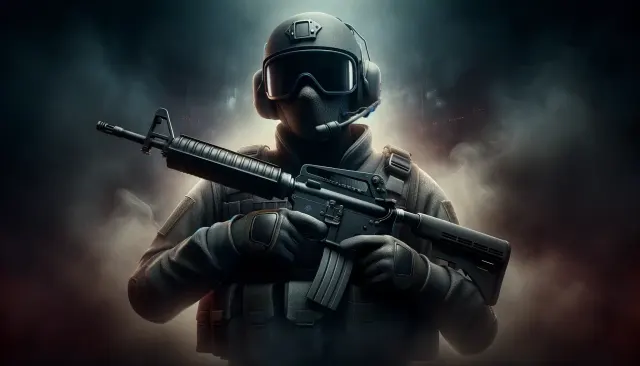
Clutching
A clutch is when you are the last player alive on your team and need to win the round against one or more remaining opponents.
Archived guide · Last edited 25 Mar 2026. Game details may have changed since publication.
CS2 Clutching Guide#
A clutch is when you are the last player alive on your team and need to win the round against one or more remaining opponents. It is one of the most mentally demanding situations in CS2 — the pressure is real, the margin for error is thin, and a single mistake often ends the round immediately. But clutching is absolutely a trainable skill. The players who win clutches consistently don’t rely on mechanical superiority alone. They follow a mental framework that gives them the best possible chance in every scenario.
The First Few Seconds Are the Most Important#
When you realize you’re the last alive, the instinct is to panic and move immediately. Resist this. The first thing you should do is stop, gather information, and assess the situation. Ask yourself: How many opponents are left? Where are they likely to be? How much time is on the clock? Do you have utility? Is the bomb planted or not?
These few seconds of assessment are not wasted time — they are the difference between a plan and a panic. Moving without knowing where the enemies are is almost always fatal in a clutch. Use sound, the radar, and your last known information about enemy positions to form a picture before you commit to any movement.
Angle Isolation: Fight One Enemy at a Time#
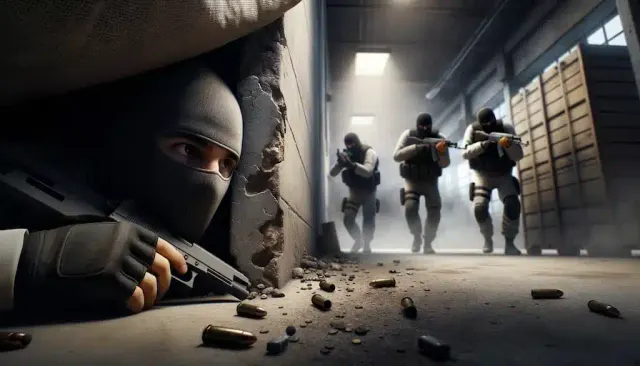
The core principle of winning a 1vX clutch is angle isolation — making sure you never fight two enemies simultaneously. If you engage a 1v2 where both players can see you at once, you will lose almost every time regardless of skill level. Your goal is to find a position or rotation path where you can isolate one enemy, kill them, then reset and do it again.
This often means taking an unexpected route, using utility to block off one enemy while you deal with another, or forcing the enemies to come to you from a single direction. Think about where the enemies need to go — if the bomb is planted on A, they will eventually push toward A or stay and wait for the defuse. Use this to predict their movement and position yourself so only one of them can engage you at a time.
Never let two enemies have crossfire on you. If you know enemy A is holding from CT and enemy B is holding from stairs, don’t try to peek through a position where both of them can shoot you. Pick the one you can fight alone first.
Using the Clock as a Weapon#
Time works differently for Ts and CTs in a clutch, and understanding this changes how you play each scenario.
As a T without the bomb, time is your enemy. The round will expire and you’ll lose. You need to plant or eliminate the remaining CTs — passive play eventually fails. As a T with the bomb already planted, the situation flips completely. Plant early when possible in a clutch, because the moment the bomb is down, you transfer the pressure to the CTs. Now they have to move toward you and make risky peeks, while you can hold a static position and wait for them.
As a CT, time usually works in your favor unless the bomb is planted. If there is no bomb down and the T is the last alive, slow play and communication wins. Don’t rush in recklessly — let the T run out of time or come to you. If the bomb is planted, you need to make a decision quickly: do you have the information and positioning to defuse safely, or should you try to pick the enemy first?
Utility in Clutch Situations#
Utility becomes disproportionately powerful in clutches because a single well-used piece can completely change the geometry of a situation. Here is how to think about each type:
Flashbangs are your most aggressive tool. A well-thrown flash lets you push into a position or make a peek that would otherwise be suicidal. If you know an enemy is holding a corner, flash them and take the duel. Don’t save flashes for a better moment — in a clutch there is no better moment.
Smokes are your most defensive tool. If you need to plant the bomb but an enemy has an angle covered, a smoke blocks their line of sight and lets you plant safely. Smokes are also excellent for faking — throw a smoke toward one site to create noise and movement cues while you actually go somewhere else.
Molotovs and incendiaries can force enemies out of positions they’re camping. If an enemy is sitting on a site waiting for you, a molotov forces them to move, which creates noise, changes their crosshair placement, and gives you information. This is especially useful on bomb sites where enemies tend to hide in the same corners every round.
HE grenades are situational but valuable if you know an enemy is low on health. A player at 15 HP behind a wall can be finished with an HE, removing the risk of taking a peek entirely.
Sound Discipline and Information Gathering#
In a clutch, sound is your most reliable source of information. Footsteps, reloads, bomb beeps, grenade bounces — every audio cue narrows down enemy positions. When you’re the last alive, stop and listen before every movement. The enemy often gives away their position without knowing it.
Equally important is controlling the sound you make. You can use footsteps deliberately — walking noisily in one direction to bait an enemy into repositioning, then silently moving to a different angle. This is especially effective in 1v1 post-plant situations where the CT is trying to figure out where you are to make their defuse attempt.
Mindset: Stay Slow When Your Brain Wants to Speed Up#
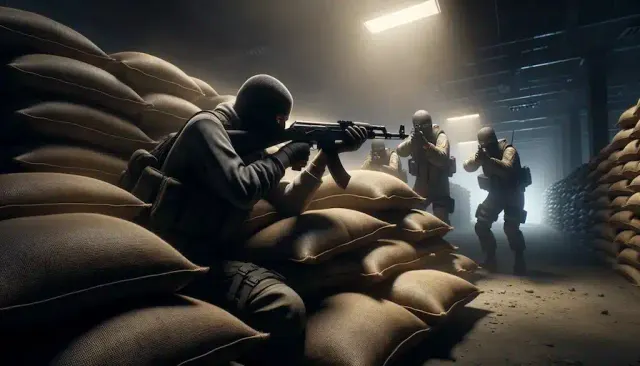
The single biggest failure in clutch situations is playing too fast. When the pressure rises, players rush, skip their checks, and push angles they wouldn’t normally push. The enemy is counting on this. They often just sit and wait for you to panic-push into them.
Train yourself to deliberately slow down when your brain is telling you to speed up. Take a breath. Check the clock — you almost always have more time than it feels like. Make your decision, execute it cleanly, and if it doesn’t work, at least you played it correctly. Bad outcomes from good decisions are part of the game. Bad outcomes from panic decisions are what you need to eliminate.
After each clutch attempt, win or lose, replay it in your head or in demo review. Ask: did I know where both enemies were before I engaged? Did I isolate the angle correctly? Did I use my utility, or save it for nothing? The answers reveal the specific areas that need work far faster than simply playing more games and hoping improvement happens on its own.
Conclusion#
Winning clutches in CS2 is not about mechanical superiority or luck. It comes down to a clear mental process: assess the situation, isolate angles, use time strategically, deploy utility at the right moment, and stay disciplined under pressure. The more deliberately you practice this framework — in deathmatch, in retake servers, and in real competitive games — the more natural it becomes. Eventually the decisions happen instinctively, and that is when you start winning rounds that used to feel impossible.
Something worth updating?
Spotted an outdated detail or something we should add?